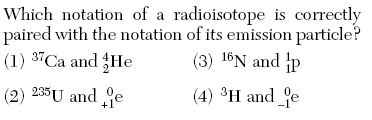
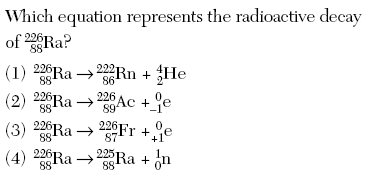
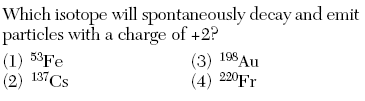
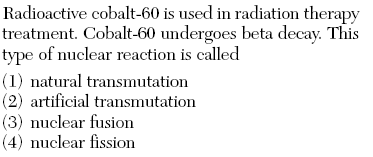
In the simplest terms, an unstable nucleus of an atom breaks apart into smaller parts.
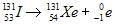
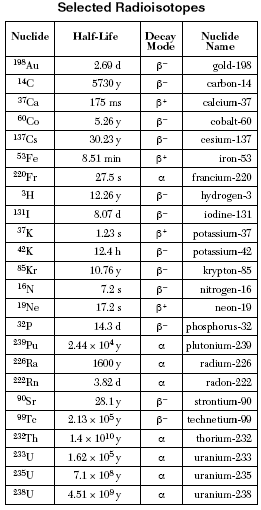
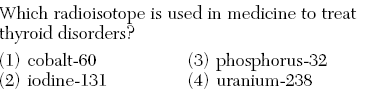
Iodine-131 produces (loses) a beta particle to produce xenon-131.
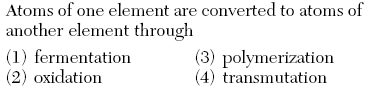
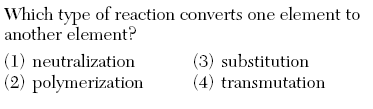
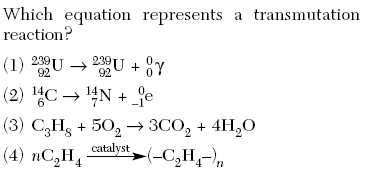
Transmutation-When an element turns into a different element. This occurs when the number of protons changes.
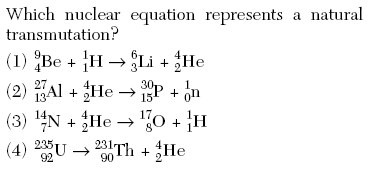
Natural Transmutation- Without the presence of an another entity, the number of protons change. In simpler terms there is only one reactant.
Artificial Transmutation- A change in the number of protons caused by another entity. So there are two reactants.
Writing Alpha Decay Expression
In alpha decay, an atom will produce an alpha particle. When you write a nuclear equation, mass must be conserved. The total mass on the left of the arrow, and the total mass on the right of the arrow are equal. In addition to mass being conserved, the total number of protons on the left must equal the total number of protons on the right.
Radium-222 undergoes alpha decay to produce radon-218.
The total mass on the left is 222 and the total mass on the right is 222 (4 + 218). The total number of protons on the left is 88 and the total number of protons on the right is 88 (2 + 86).
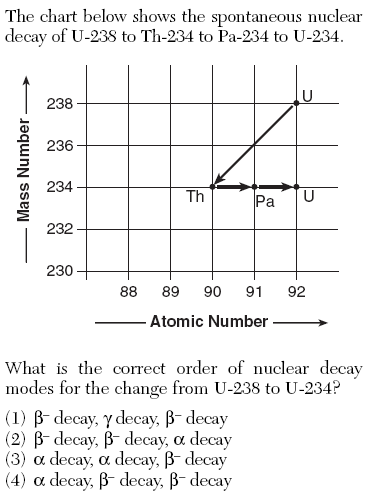
During alpha decay, the mass of the parent atom decreases by 4 and the atomic number decreases by 2.
Writing Beta Decay Expression
In beta decay, an atom will produce a beta particle (electron). Please keep in mind that this is different from losing an electron to become an ion. In beta decay a neutron becomes a proton by producing an electron. When an atom loses an electron to become an ion, the atom is simply losing an electron from outside the nucleus. Thorium-234 will become protactinium-234 by producing a beta particle.
During beta decay, the mass does not change but the atomic number increases by 1.
Gamma Rays
Electromagnetic radiation, with a short wavelength, and very high energy. Produced by the rearrangement of particles in the nucleus or certain electron transitions. Very penetrating, very dangerous.
Writing Positron Decay Expressions
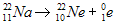
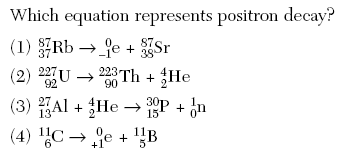
In positron decay, an atom will produce a particle that has the same mass as an electron but with a positive charge. Sodium-22 will undergo positron emission to produce neon-22.
During positron decay, the mass does not change but the atomic number decreases by 1.
Antimatter experiment-
Regents Examples
Highlight Answer
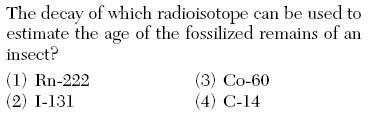
-->4
Highlight Answer
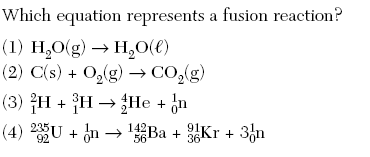
-->4
Highlight Answer
-->1
Regents Note-These natural transmutations only have 1 reactant.
Highlight Answer
--> 4, all the other reactions have 2 reactants
Highlight Answer
-->4
Highlight Answer
-->4
Highlight Answer
-->1
Highlight Answer
-->4
Highlight Answer
-->1
Highlight Answer
-->2
Highlight Answer
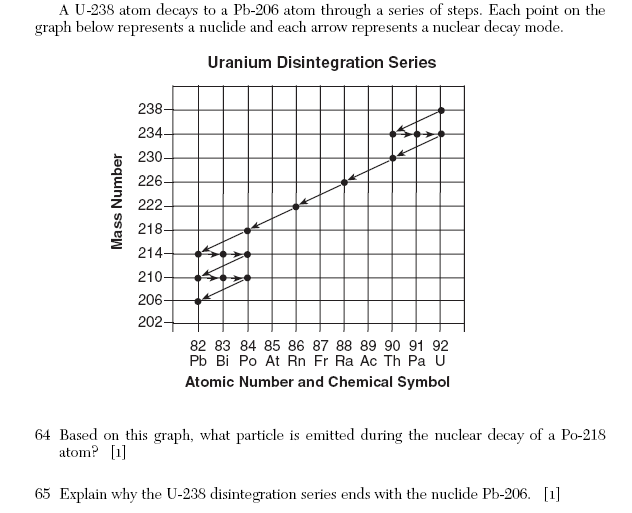
64-->Alpha Decay
65-->Pb-206 has a stable nucleus and is not radioactive
Highlight Answer
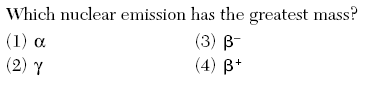
-->1
Highlight Answer
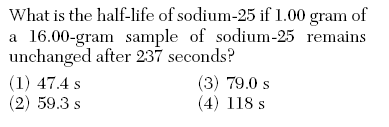
-->2
Highlight Answer
-->4
Highlight Answer
-->3
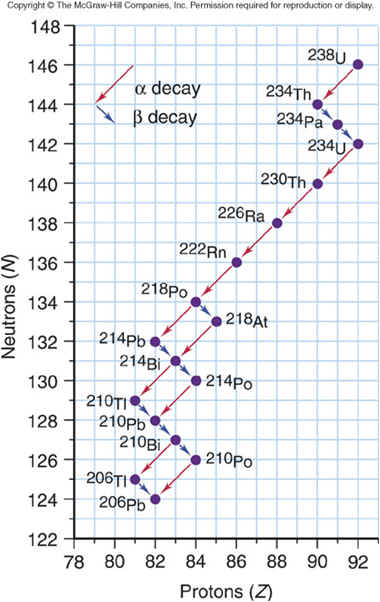
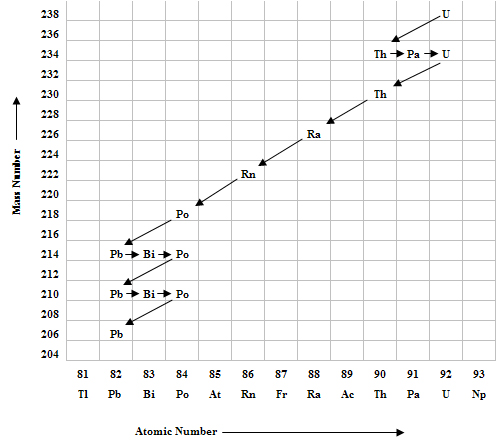
Radioactive Decay Series of U-238 to Pb-206
U-238 decays to Pb-206 through a series of natural transmutations until it reaches lead-206.
The ratio of U-238 to the amount of Pb-206 in a geological sample can be used to calculate the age of the rocks formation.
The table below show pne of the possible ways that U-238 can decay into Pb-206