The Abbreviated History of the Periodic Table for Regents Chemistry
1829-Geman Chemist Johann Dobereiner (Dobereiner PDF article by Dr. James L. Marshall) started the challenge of constructing a Periodic Table. About 60 elements were known at this time. He grouped elements based on similarities. He then proposed the Law of Triads: Middle element in the triad had atomic weight that was the average of the other two members.
Ca(40) Sr(88) and Ba (137) Hey (137 + 40)/2= 88
Dobereiner noticed the same pattern for the alkali metal triad (group 1 now) and the halogen triad (group 17).
(I) lithium, sodium and potassium
(II) calcium, strontium and barium
(XVII) chlorine, bromine and iodine
1862-Alexandre Beguyer de Chancourtois professor at the School of Mines in Paris. he Published a list of known elements. this list was constructed as a continuous graph wrapped around in a cylinder, where elements that exhibited similar properties occupied the same column. He didn't have any pretty pictures to go with his work, so it went ignored until Dmitri Mendeleev come along.
1864 – English chemist John Newlands – early table likened periodicity to the musical octave – “law of octaves” – properties repeated with every eighth element.
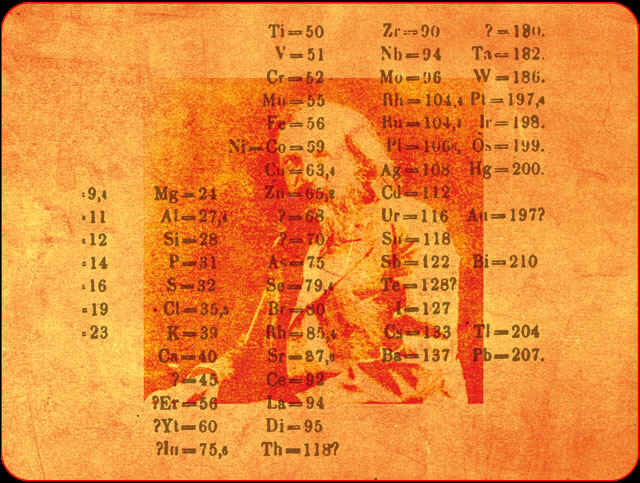
1869-The Russian scientist Dmitri Mendeleev first organized the elements into a table based upon properties of the elements that were recurrent (periodic).Elements in the same column (Group) generally have similar properties.