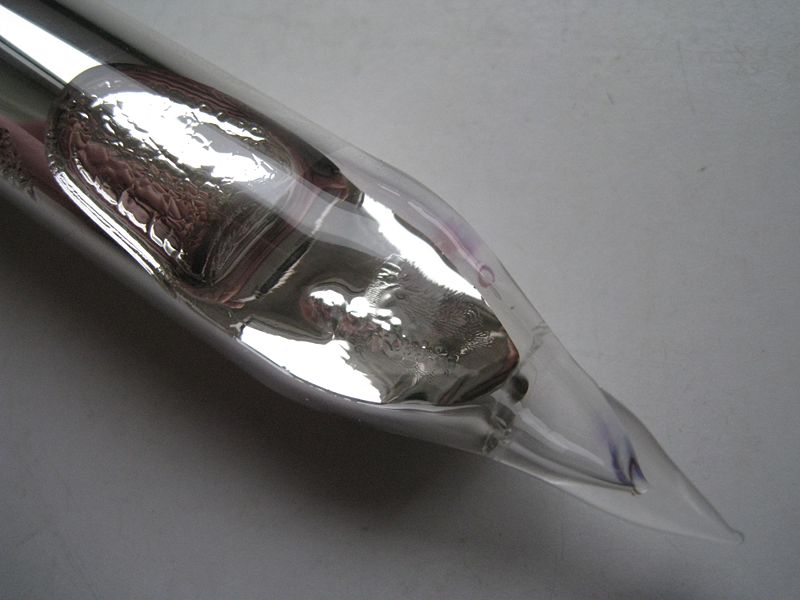
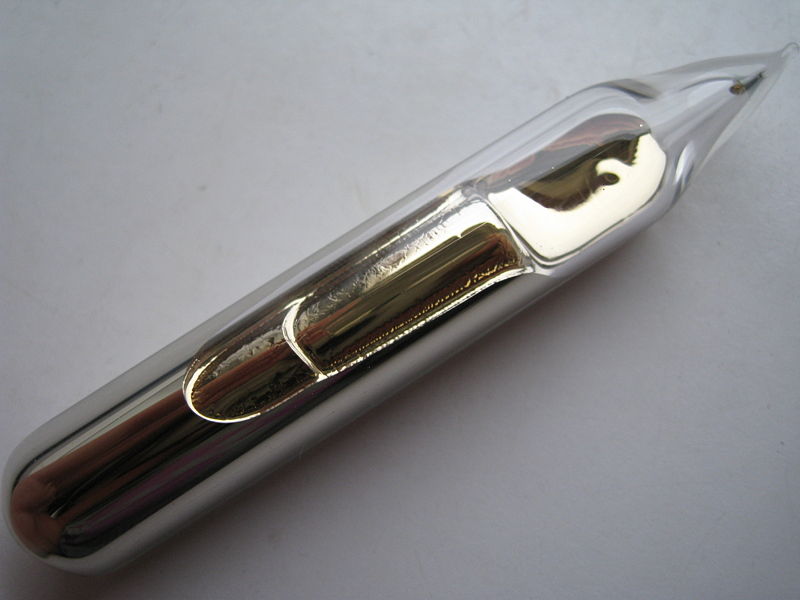
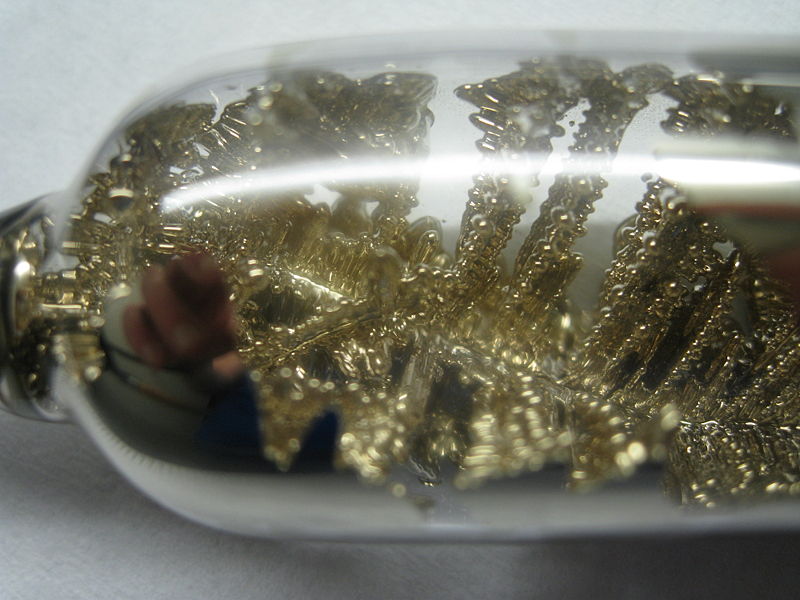
Group 1 Metals are the most reactive metals on the periodic table and do not exist free in nature. They must be stored under oil or they will quickly oxidize . They have very low ionization energy and give up their outer s1 electron very easily. They are very soft metals that can be cut with a knife. They react violently with water. The lower the ionization energy the more reactive these metals. So the lithium is the least reactive and Cesium is the most reactive.
Like other alkali metals, lithium has a single valence electron which it will readily lose to form a cation, indicated by the element's low electronegativity. As a result, lithium is easily deformed, highly reactive, and has lower melting and boiling points than most metals. These and many other properties attributable to alkali metals' weakly-held valence electron are most distinguished in lithium, as it possesses the smallest atomic radius and thus the highest electronegativity of the alkali group.
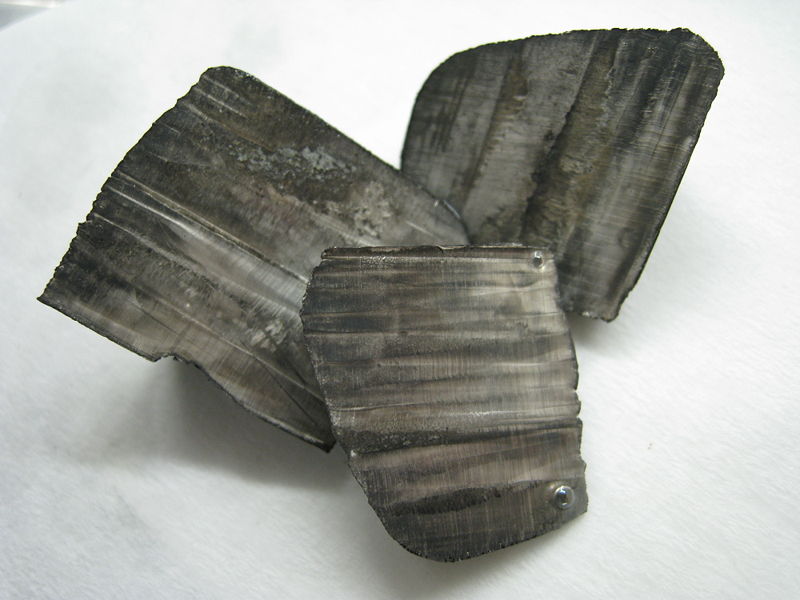
Lithium is soft enough to be cut with a knife, though this is more difficult than cutting sodium. The fresh metal has a silvery-white color which only remains untarnished in dry air. Lithium has about half the density of water, giving solid sticks of lithium metal the odd heft of a light-to-medium wood like pine. The metal floats highly in hydrocarbons; in the laboratory, jars of lithium are typically composed of black-coated sticks held down in hydrocarbon mechanically by the jar's lid and other sticks.
Medical uses
Lithium salts were used during the 19th century to treat gout. Lithium salts such as lithium carbonate (Li2CO3), lithium citrate, and lithium orotate are mood stabilizers. They are used in the treatment of bipolar disorder, since unlike most other mood altering drugs, they counteract both mania and depression. Lithium can also be used to augment other antidepressant drugs. It is also sometimes prescribed as a preventive treatment for migraine disease and cluster headaches.
from wikipedia
Lithium Metal foil from an Energizer Lithium Battery
Sodium
Compared with other alkali metals, sodium is generally less reactive than potassium and more reactive than lithium,in accordance with "periodic law": for example, their reaction in water, chlorine gas, etc
Owing to its high reactivity, sodium is found in nature only as a compound and never as the free element. Sodium reacts exothermically with water: small pea-sized pieces will bounce across the surface of the water until they are consumed by it, whereas large pieces will explode. While sodium reacts with water at room temperature, the sodium piece melts with the heat of the reaction to form a sphere, if the reacting sodium piece is large enough. The reaction with water produces very caustic sodium hydroxide (lye) and highly flammable hydrogen gas.
When sodium or its compounds are introduced into a flame it will contribute a bright yellow color.
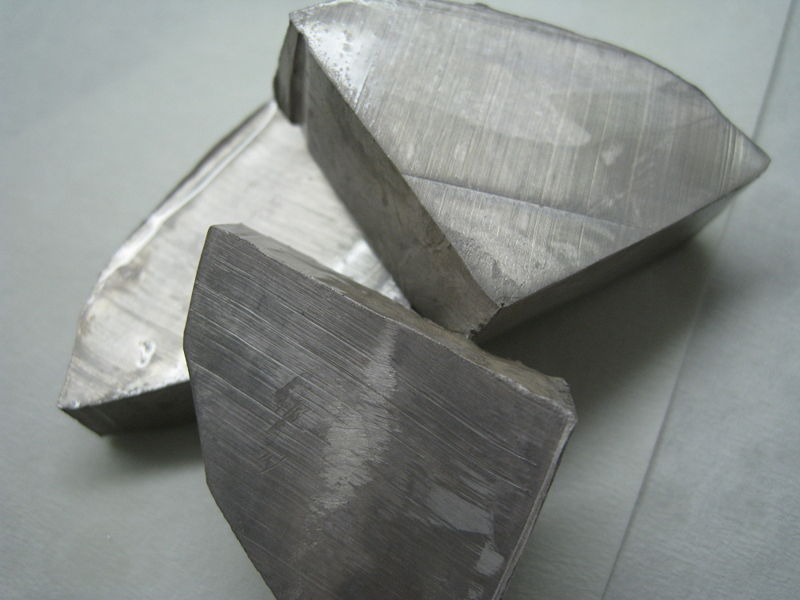
At room temperature, pure sodium is so soft that it can be easily cut with a butter knife. In air, the bright silvery luster of freshly exposed sodium will rapidly tarnish.
from -wikipedia
Potassium
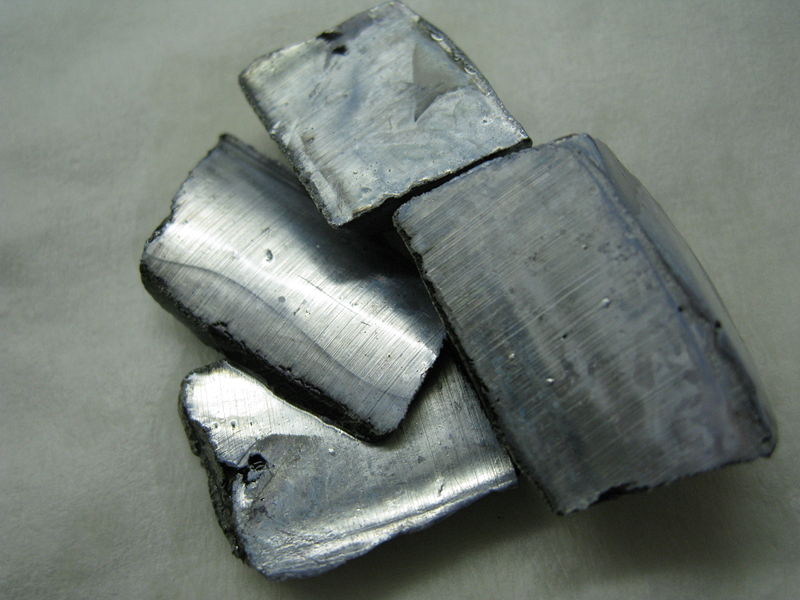
Potassium is the second least dense metal; only lithium is less dense. It is a soft, low-melting solid that can easily be cut with a knife. Freshly cut potassium is silvery in appearance, but in air it begins to tarnish toward grey immediately.
Potassium and its compounds emit a violet color in a flame.
Potassium must be protected from air for storage to prevent disintegration of the metal from oxide and hydroxide corrosion. Often samples are maintained under a reducing medium such as kerosene.
Like the other alkali metals, potassium reacts violently with water producing hydrogen. The reaction is notably more violent than that of lithium or sodium with water, and is sufficiently exothermic that the evolved hydrogen gas ignites.
from- wikipedia
Rubidium
Rubidium reacts violently with water and can cause fires. To ensure both health and safety and purity, this element must be kept under a dry mineral oil, in a vacuum or in an inert atmosphere.
Cesium
Along with gallium, francium, and mercury, cesium is among the only metals that are liquid at or near room temperature. Cesium reacts explosively in cold water and also reacts with ice at temperatures above -116 °C (-177 °F, 157 K).
Cesium, being one of the heavier alkali metals, is also one of the most reactive and is highly explosive when it comes in contact with water, as the hydrogen gas produced by the reaction is heated by the thermal energy released at the same time, causing ignition, and a violent explosion (the same as all alkali metals) - but cesium is so reactive, this explosive reaction can even be triggered by cold water or ice.
Francium
Francium was discovered by Marguerite Perey in France (from which the element takes its name) in 1939. It was the last element discovered in nature, rather than synthesized. Outside the laboratory, francium is extremely rare, with trace amounts found in uranium and thorium ores, where the isotope francium-223 continually forms and decays. As little as 30 g (one ounce) exists at any given time throughout the Earth's crust; the other isotopes are entirely synthetic. This make it the second rarest element after astatine. The largest amount ever collected of any isotope was a cluster of 10,000 atoms (of francium-210) created as an ultra-cold gas at Stony Brook in 1997.