It commonly refers to any element in the d-block of the periodic table.
The first definition is simple and has traditionally been used. However, many interesting properties of the transition elements as a group are the result of their partly filled d-subshell. Periodic trends in the d block (transition metals) are less prevailing than in the rest of the periodic table. Going across a period, the valence doesn't change, so the electron being added to an atom goes to the inner shell, not outer shell, strengthening the shield.
The (loosely defined) transition metals are the 40 chemical elements 21 to 30, 39 to 48, 71 to 80, and 103 to 112. The name transition comes from their position in the periodic table of elements. In each of the four periods in which they occur, these elements represent the successive addition of electrons to the d atomic orbitals of the atoms. In this way, the transition metals represent the transition between group 2 elements and group 13 elements.
Properities
Transition elements tend to have high tensile strength, density and melting and boiling points. As with many properties of transition metals, this is due to d orbital electrons' ability to delocalize within the metal lattice. In metallic substances, the more electrons shared between nuclei, the stronger the metal.
There are several common characteristic properties of transition elements:
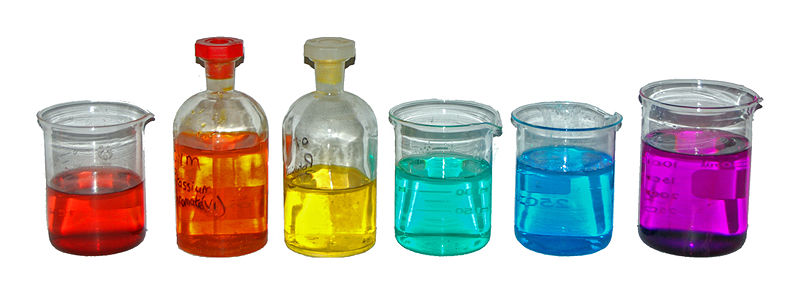
They often form colored compounds.
They can have a variety of different oxidation states.
At least one of their compounds has an incomplete d-electron subshell.
They are often good catalysts.
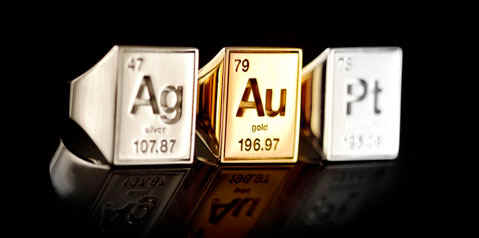
They are silvery-blue at room temperature (except copper and gold).
They are solids at room temperature (except mercury).